



Technological innovation of integrated systems

Breaking the Mold – The Fundamental Flaws of Traditional Facades
Traditional building envelopes, particularly those employing External Insulation Finishing Systems (EIFS or ETICS), are constrained by a century-old design philosophy: "layered application" and "on-site mechanical fixing." Insulation boards are adhered to the wall with mortar and then redundantly secured with numerous metal or plastic mechanical anchors (ties).
Thermal Bridging
Every anchor penetrating the insulation layer acts as a microscopic "energy bridge." The high thermal conductivity of metal components allows indoor heat to escape rapidly in winter and outdoor heat to invade easily in summer. Research shows that local heat flux density at anchor points is hundreds of times greater than in surrounding areas, degrading the wall's overall theoretical thermal performance by up to 20-30%, making it an "invisible energy funnel."


Water & Moisture Management Failure
Anchor drill holes compromise the continuity of the insulation layer, creating perfect capillary paths for water intrusion. Wind-driven rainwater infiltrates along the anchor shaft, becoming trapped behind the insulation or between board joints. This leads to permanent loss of insulation performance (water conducts heat 25 times better than dry insulation), freeze-thaw damage, mold growth, and internal structural corrosion. Relying on post-application sealants is a stopgap measure, as their aging cycle is far shorter than the building's lifespan.
Systemic & Durability Risks
Different materials (e.g., EPS board vs. metal anchor, polymer base coat) have vastly different coefficients of thermal expansion, elastic moduli, and creep characteristics. Under temperature fluctuations and structural micro-movements, they generate continuous shear and tensile stresses at their interfaces, ultimately leading to insulation board compression deformation, cracking around anchors, adhesive failure, and even full-scale detachment. Furthermore, on-site construction quality is heavily influenced by worker skill and weather conditions, resulting in high variability and hidden defects that are difficult to detect comprehensively.

The core differentiated advantages of the pull-type integrated insulation board

Structural integration, never falling off, and having the same lifespan as the building
Different from the separated structure of traditional external insulation, this product adopts a cast-in-place built-in pull-tab anchoring integrated structure. The insulation board is pre-embedded inside the building wall and completely occluded and poured with the concrete main body through high-density penetrating anti-corrosion pull tabs. The insulation layer, structural layer and protective layer are integrated without hidden dangers of hollowing, layering and falling off. It completely solves the problem of insulation layer falling off under overseas working conditions of typhoons, strong sand wind and large temperature difference, with full wind pressure resistance, earthquake resistance and thermal expansion and contraction resistance. Its service life is synchronized with the building main body, reaching more than 50 years without repeated renovation and repair for life, eliminating exterior wall insulation safety accidents from the source.
Ultra-high fire resistance grade, full compliance acceptance throughout the region
Adopting flame-retardant modified high-density insulation core material and matching with an integrated inorganic protective structure, the overall fire flame retardant performance of the product reaches the overseas A1-class non-combustible standard with a fire resistance limit of more than 4 hours. It does not burn, melt, drip or spread smoke in case of open fire, completely eliminating the hidden danger of exterior wall insulation fire. It fully meets the high-grade fire acceptance specifications of schools, hospitals, municipal buildings, indemnificatory housing and commercial complexes in Europe, America, the Middle East, Southeast Asia and other countries, solving the core problem of unqualified fire resistance of traditional insulation boards and blocked project acceptance, with zero acceptance risk, suitable for all overseas public building and residential projects with high fire protection requirements.

Extremely weather-resistant and anti-aging, suitable for complex climates around the world
Specially modified and upgraded for diverse overseas extreme climates, the product has super performance of high temperature resistance, UV resistance, freeze-thaw resistance, sand wind resistance and damp mildew resistance. It does not age, pulverize or lose insulation performance under continuous high-temperature exposure of 55℃ in the Middle East; no water seepage, mildew or cracking in high humidity environment with typhoons and rainstorms in Southeast Asia; no embrittlement, falling off or unstable insulation in low-temperature freeze-thaw environments in Europe and America. It resists ultra-large day-night temperature difference and alternating seasonal climate corrosion, with stable structure and constant performance in long-term outdoor use, completely solving the industrial pain points of traditional insulation boards such as poor weather resistance, easy damage and short service life.
The construction is highly efficient and cost-effective, significantly shortening the overseas construction period
Traditional exterior wall insulation requires multiple processes such as plastering, leveling, pasting, anchoring, waterproofing and protection, with long construction cycle and high labor costs. The pull-tab integrated insulation board realizes synchronous completion of main body pouring and insulation construction. With factory prefabricated standardized boards, it is directly pre-embedded and poured on site, eliminating more than 80% of traditional external insulation construction procedures and later plastering and leveling. The construction efficiency is increased by more than 3 times, greatly shortening the overall project construction period. Meanwhile, it reduces a large number of labor, material and equipment investment, avoids quality problems caused by manual construction errors, and the comprehensive cost of batch projects is far lower than that of traditional insulation systems, perfectly adapting to the current situation of expensive labor and tight construction period of overseas projects.


It has an extremely high energy-saving rate and is compatible with global low-carbon building standards
Adopting high-density closed-cell insulation core material, the product has ultra-low thermal conductivity and excellent thermal insulation performance, which can effectively block outdoor high and low temperature conduction, with a building energy-saving rate of more than 75%, greatly reducing building air conditioning and heating energy consumption. It fully complies with the construction standards of global low-carbon buildings, green buildings and ultra-low energy consumption passive houses, helping overseas projects obtain green building certification and pass special energy-saving acceptance. It adapts to the current mainstream trend of global building energy-saving upgrading and improves the premium and market competitiveness of projects.
Waterproof and crack-resistant structure, providing all-round protection for the main body of the building
The integrated composite structure is dense and pore-free, matched with pull-tab anchoring and sealing design, which can completely block the capillary water seepage channels of the wall, eliminate rainwater and moisture penetration into the wall, and solve the problems of wall water seepage, alkali return, mildew and steel bar corrosion from the source. Meanwhile, the board has high flexible crack resistance, which can expand and contract slightly with the thermal expansion and contraction of the wall, resist fine cracking of the base layer, keep the wall completely closed for a long time, fully protect the building main structure, and extend the overall service life of the building.
Main Feature
●We are the global leader in integrated insulation-structure systems.
●Our products are fully prefabricated in factories and installed quickly on-site like building blocks.
●We completely solve traditional facade issues: thermal bridges, leaks, and detachment.
●The system saves up to 40% energy and lasts over 50 years.
●We provide complete green solutions for residential, commercial, and public buildings.
Application Range
●Our integrated insulation system is suitable for high-rise residential, commercial, and public buildings across all global climate zones.
●It is particularly well-suited for retrofitting public facilities like hospitals and schools with strict indoor environment requirements.
●The system provides excellent fire protection and energy-saving benefits in specialized buildings like industrial plants and data centers.
●It meets the technical requirements of major global green building certifications, including LEED and Passive House standards.
●The system is applicable to both new construction projects and widely used for energy-saving retrofits and facade renovations of existing buildings.

Integrated Insulation-Structure System Technical Performance Data Sheet
热工性能 Thermal Performance
| 性能参数 Performance Parameter | 测试标准 Test Standard | 技术指标 Technical Specification | 单位 Unit |
|---|---|---|---|
| 传热系数 Thermal Transmittance (K-value) | EN ISO 6946 / ASTM C1363 | ≤ 0.15 | W/(m²·K) |
| 线性热桥系数 Linear Thermal Bridge Coefficient (Ψ-value) | EN ISO 10211 | ≤ 0.01 | W/(m·K) |
| 点热桥系数 Point Thermal Bridge Coefficient (χ-value) | EN ISO 10211 | ≤ 0.005 | W/K |
| 导热系数 Thermal Conductivity (λ-value) | EN 12667 / ASTM C518 | ≤ 0.020 | W/(m·K) |
| 热阻 Thermal Resistance (R-value) | EN 12667 | ≥ 5.0 | m²·K/W |
| 红外热成像温差 Infrared Thermography Temperature Difference | EN 13187 | ≤ 1.0 | ℃ |
防火性能 Fire Performance
| 性能参数 Performance Parameter | 测试标准 Test Standard | 技术指标 Technical Specification | 等级/结果 Class/Result |
|---|---|---|---|
| 燃烧性能分级 Fire Classification | EN 13501-1 | A2-s1, d0 | A级不燃 Class A Non-combustible |
| 耐火极限 Fire Resistance | EN 1364-1 / ASTM E119 | 120 | 分钟 minutes |
| 背火面温升 Temperature Rise (Unexposed Surface) | EN 1363-1 | ≤ 140 | ℃ |
| 烟气毒性 Smoke Toxicity | EN 13823 | AQ1 | 准安全级 Quasi-Safe Level |
| 火焰蔓延指数 Flame Spread Index | ASTM E84 | ≤ 15 | - |
| 烟密度指数 Smoke Density Index | ASTM E84 | ≤ 50 | - |
结构性能 Structural Performance
| 性能参数 Performance Parameter | 测试标准 Test Standard | 技术指标 Technical Specification | 单位 Unit |
|---|---|---|---|
| 抗风压性能 Wind Load Resistance | EN 12179 / ASTM E330 | ≥ 5000 | Pa |
| 抗震性能 Seismic Performance | EN 1998-1 / IBC 2018 | Passes 8-degree rare earthquake test | - |
| 抗冲击性能 Impact Resistance | EN 12600 / ASTM D4226 | 50J无裂纹 50J no cracking | 焦耳 Joules |
| 连接安全系数 Connection Safety Factor | ETAG 034 / AC320 | ≥ 4.0 | - |
| 抗拉拔强度 Tensile Strength | EN 13412 | ≥ 6.5 | kN/anchor |
| 抗剪强度 Shear Strength | EN 12090 | ≥ 0.30 | MPa |
防水防潮性能 Waterproofing & Moisture Performance
| 性能参数 Performance Parameter | 测试标准 Test Standard | 技术指标 Technical Specification | 单位 Unit |
|---|---|---|---|
| 静态水压防水 Static Water Pressure Resistance | EN 1928 / ASTM D5385 | ≥ 2000 | mmH₂O |
| 接触角 Contact Angle (Water) | ISO 27448 | ≥ 110 | 度 degrees |
| 吸水率 Water Absorption | EN 1609 / ASTM C272 | ≤ 1.0 | % (vol.) |
| 透汽率 Vapor Permeability | EN 12086 / ASTM E96 | 0.5-3.0 (adaptive) | g/(m²·24h) |
| 抗冷凝性能 Anti-condensation Performance | ISO 13788 | No condensation risk at ΔT≥15℃ | - |
| 抗冻融循环 Freeze-thaw Cycle Resistance | EN 12091 | ≥300 cycles, no damage | 循环 cycles |
耐久性能 Durability Performance
| 性能参数 Performance Parameter | 测试标准 Test Standard | 技术指标 Technical Specification | 结果 Result |
|---|---|---|---|
| 设计使用寿命 Design Service Life | ISO 15686-1 | ≥ 50 | 年 years |
| 冻融循环后强度保持率 Strength Retention after Freeze-thaw | EN 12091 | ≥ 95 | % |
| UV老化后性能保持率 Performance Retention after UV Aging | EN 12467 / ASTM G154 | ≥ 95 | % |
| 湿热老化后性能保持率 Performance Retention after Damp Heat Aging | EN 14188 | ≥ 90 | % |
| 年老化率 Annual Aging Rate | ISO 2440 | ≤ 1.0 | %/year |
| 尺寸稳定性 Dimensional Stability | EN 1604 (70℃, 48h) | ≤ 0.5 | % |
环境性能 Environmental Performance
| 性能参数 Performance Parameter | 测试标准 Test Standard | 技术指标 Technical Specification | 单位/等级 Unit/Class |
|---|---|---|---|
| 甲醛释放量 Formaldehyde Emission | EN 717-1 / ASTM D6007 | ≤ 0.01 | mg/m³ |
| VOC总释放量 Total VOC Emission | ISO 16000-6 / ASTM D5116 | ≤ 0.05 | mg/m³ |
| 可回收率 Recyclability Rate | ISO 14021 | ≥ 85 | % |
| 碳排放(生产阶段) Carbon Emission (Production Phase) | ISO 14067 | ≤ 15 | kgCO₂/m² |
| 材料环保认证 Environmental Certification | - | EPD, GreenGuard, Blue Angel | - |
质量保证 Quality Assurance
| 认证体系 Certification System | 认证机构 Certifying Body | 证书编号 Certificate Number | 有效期 Validity |
|---|---|---|---|
| ISO 9001:2015 Quality Management | TÜV Rheinland | 认证中 pending | 3年 3 years |
| ISO 14001:2015 Environmental Management | TÜV Rheinland | 认证中 pending | 3年 3 years |
| 中国绿色建材认证 China Green Building Material | CNAS | GBM-2023-001 | 5年 5 years |
|
FAQ
 Q1: What is an Integrated Insulation-Structure System? How does it differ from traditional insulation systems? A1: The integrated system prefabricates insulation materials and structural support into complete modules through molecular-level fusion technology in the factory. Compared to traditional layered construction, it eliminates interface issues, achieves zero thermal bridges, zero leakage, zero hollowing, and improves installation efficiency by 3-5 times.
Q2: What is the system's fire performance? A2: The complete system uses Class A non-combustible materials (EN 13501-1 A2-s1, d0), passes 2-hour fire resistance testing, with unexposed surface temperature rise ≤140℃ and safe-level smoke toxicity (AQ1), meeting the highest fire safety requirements.
Q3: What is the system's service life? A3: Design service life ≥50 years. After 300 freeze-thaw cycles and 5000 hours of UV aging testing, performance retention >95%. Material annual aging rate ≤1%, essentially achieving the same lifespan as the main building structure.
Q4: How does the system provide waterproofing and moisture resistance? A4: Four-layer protection: 1) Nano hydrophobic coating (contact angle ≥110°); 2) Seamless integrated design; 3) Pressure-equalized drainage system; 4) Intelligent vapor permeability regulation. Water absorption ≤1.0%, effectively preventing condensation and mold.
Q5: How long does installation take? A5: Each team (4-6 workers) can install 300-500㎡ per day. Compared to traditional systems with 10+ construction steps, the integrated system requires only 3 main steps, reducing overall project duration by 30-50%.
Q6: Can it adapt to complex architectural shapes? A6: Yes. We provide: 1) Custom curved surfaces with radius ≥3m; 2) Special-shaped module production; 3) Multiple finish options (paint/metal/stone effects); 4) Perfect integration design with curtain walls, windows, and doors.
|

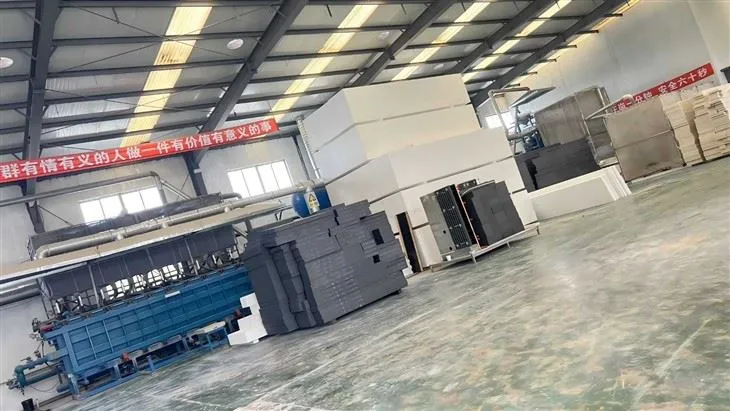
Pull-type insulation structure integrated board Factory in China
Under the general trend of global low-carbon energy saving, building safety and prefabricated construction, traditional exterior wall external insulation products can no longer meet the construction needs of overseas high-end construction projects due to large safety hazards, short service life, high operation and maintenance costs and poor compliance. With six core advantages of permanent non-falling structure, 50-year long-term durability, A1-class high fire resistance, full-climate weather resistance, high-efficiency energy saving and rapid construction cost reduction, the pull-tab combined integrated thermal insulation structure board completely subverts the traditional exterior wall insulation system and becomes a new generation of benchmark building materials replacing traditional external insulation overseas.
Hot Tags: special thermal insulation structure board for prefabricated buildings, China special thermal insulation structure board for prefabricated buildings manufacturers, suppliers, factory, desktop computer insulation, university insulation, durable insulation products, insulating foam, green and environmentally friendly extruded board, ups insulation


