Stop wasting money on cracked and moldy walls caused by freeze-thaw and water seepage! Dual-mode steel mesh insulation board delivers -40℃ freeze resistance and all-weather waterproof performance, protecting your buildings for 50 years across extreme global climates!

Jun 13, 2026

Leave a message


Steel wire mesh frame cast-in-place composite insulation board


Against the backdrop of increasingly stringent global building energy-saving policies and surging demand for cost reduction and efficiency improvement in overseas small and medium-sized infrastructure projects, the selection of exterior wall insulation materials no longer only focuses on basic thermal insulation and fireproof performance. Four core indicators including structural compatibility, facade freedom, construction error tolerance and full-life-cycle cost have become the key evaluation criteria for overseas contractors, private owners and government enterprise purchasers. The traditional exterior wall insulation industry has long been trapped in a polarized dilemma: low-end bonded insulation boards are low-priced but suffer from short service life, hollowing and peeling risks, and cannot bear heavy decorative finishes; high-end steel structure insulation systems deliver comprehensive performance yet cannot be popularized in sinking markets such as social housing, rural self-buildings and small commercial factories due to exorbitant costs and complex construction processes. As the third-generation composite formwork insulation building material, the cast-in-place steel wire mesh composite insulation board breaks the polarization dilemma. It adopts fully-enclosed automatically welded galvanized steel wire mesh as the load-bearing skeleton, embedded with diversified energy-saving insulation cores, and covered with flexible crack-resistant waterproof mortar on both sides. Integrating five core functions including permanent formwork, wall thermal insulation, structural reinforcement, decorative base and extreme condition protection, the product features an integral closed mesh structure without weak external pull-tab nodes and supports two construction methods of cast-in-place pouring and external wall mounting. Compatible with over 90% of low-rise and mid-rise civil and industrial buildings worldwide, it has emerged as an all-round insulation solution for the sinking overseas construction market and a must-have popular product for low-rise building tracks in global building material trade in 2026.

Product Structure & Working Principle

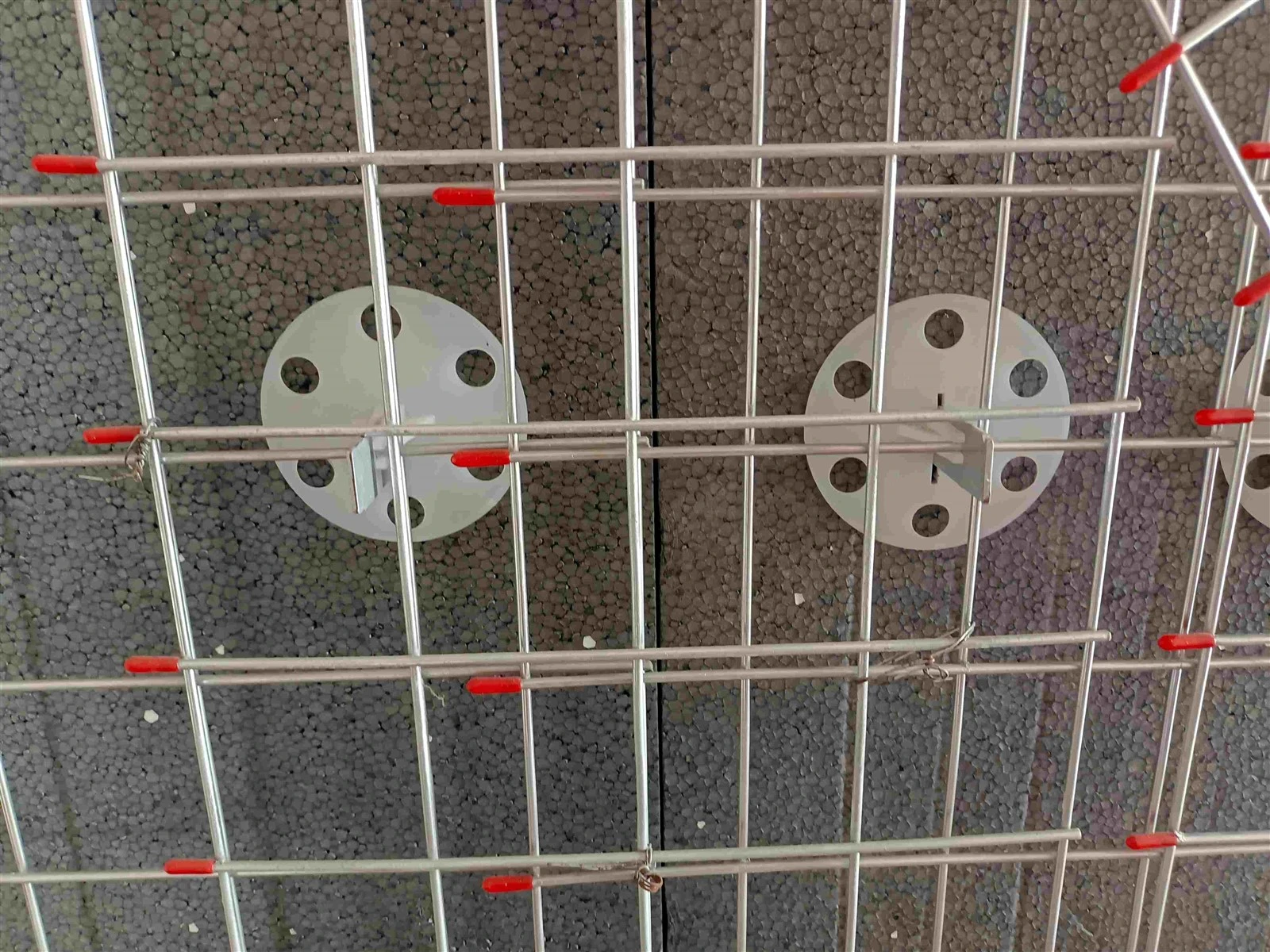
The product adopts an integrated three-layer closed composite structure and is prefabricated on intelligent assembly lines throughout the whole process, eliminating common industry defects caused by manual processing such as loose welding points, board deformation and uneven mortar thickness, with overall structural stability far exceeding ordinary sandwich insulation boards. The first layer is a closed three-dimensional galvanized steel wire mesh. Different from conventional open mesh and external pull-tab structures, it is welded bidirectionally with hot-dip galvanized steel wires with high zinc coating. The closed-loop grid arrangement without scattered wire ends improves the board's deformation resistance and impact resistance, and eliminates rust risks caused by moisture from the source. The second layer is a flexibly adaptive insulation core. Four mainstream core materials including flame-retardant EPS foam, pressure-resistant XPS board, high-density rock wool and polyurethane PU are available for customization. Compared with traditional products with only two core options, the added polyurethane material adapts to extremely cold and humid areas. The core fits the steel wire mesh seamlessly without hollow gaps to block thermal bridge transmission and achieve a maximum energy-saving rate of 75%. The third layer is a double-sided flexible waterproof crack-resistant mortar layer. Different from rigid ordinary mortar, it is added with polymer elastic modified factors to adapt to tiny thermal expansion and contraction of the wall base and prevent temperature-difference cracking. Its dense waterproof surface can resist rainwater penetration, salt alkali corrosion, UV aging and sand wind abrasion. Two construction modes are available: under the cast-in-place mode, the board serves as a permanent internal/external formwork and occludes with wall steel bars to bear force synchronously after concrete pouring; under the external mounting mode, the board is fixed on the surface of old walls with special anti-corrosion anchor bolts without removing the original base, suitable for old building renovation projects. Both modes enable long-term coexistence of the insulation layer and building walls.


Industry Paint Points Analysis

Based on the big data of building material procurement in more than 130 countries worldwide from 2025 to 2026 and the review data of over 200 overseas cooperative projects, the pain points of the global exterior wall insulation market show obvious hierarchical characteristics. High-rise commercial buildings prioritize fire resistance and anti-peeling performance, while low-rise and mid-rise brick-concrete and frame-shear wall buildings accounting for 70% of the market are plagued by six core problems including limited decorative finish options, single structural adaptability, low construction error tolerance, poor weather resistance in extreme climates, high implicit full-cycle cost and high renovation threshold for old buildings. These pain points remain unsolved blind spots for most insulation products. Most mainstream insulation products are developed for high-rise shear wall buildings. Direct application in low-rise brick-concrete and old building renovation projects will cause various adaptation problems, increasing rework costs and acceptance difficulties, which is the core reason why small and medium-sized purchasers abandon high-end integrated boards and low-cost thin-plastered insulation boards to seek new balanced insulation solutions.
General and universal pain points

Wire Mesh Steel Integrated Insulation Structure


Finish limitation: 90% of external and internal insulation boards have insufficient surface bearing capacity and only support light finishes such as water-based paint and stone imitation paint, failing to bear heavy decorative materials including full-body tiles, granite, mosaics and washed stone. It restricts the diversification of facade design and cannot meet the rigid tile aesthetic demand of users in the Middle East, North Africa and South America;

Wire Mesh Steel Integrated Insulation Structure


Structural adaptation defects: Most existing integrated boards are only suitable for pure cast-in-place shear wall buildings. When applied to three mainstream low-rise building types including aerated brick brick-concrete structures, red brick masonry and old renovated buildings, they feature large splicing gaps and cumbersome node treatment, leading to frequent thermal bridge, water seepage and alkali efflorescence problems;

Wire Mesh Steel Integrated Insulation Structure


Polarized construction thresholds: Low-end thin-plastered insulation relies on senior skilled workers with cumbersome procedures and high rework rates; high-end pull-tab integrated boards have strict requirements on base flatness and pouring sequence, and low-skilled workers are prone to operational errors;
1(2)


Uncontrollable implicit cost: Low-priced boards have low upfront procurement costs but require renovation and maintenance every 3 to 5 years. With additional expenses for finish upgrading and damage repair, their 10-year full-cycle cost far exceeds that of mid-to-high-end composite boards;
641efc614faf7bc912ca7d76c9769e8


Poor old renovation adaptability: Traditional insulation renovation requires large-scale removal of the original wall base, featuring long construction cycles and massive construction waste, which easily disturbs normal business and residents' lives during the renovation of old communities and street-side stores.


The exclusive pain points of the four core overseas regions


Tropical rainy areas in South America: Low-rise residential buildings are densely distributed in Brazil, Peru, Colombia and other countries. Heavy rains are frequent in rainy seasons, and ordinary insulation boards with poor waterproof sealing performance are prone to mildew and bulging after rainwater penetrates the core. Meanwhile, local residents prefer colorful mosaic finishes, which cannot be directly pasted on traditional insulation boards;


Edge areas of the Sahara in North Africa: Sandstorms are rampant in Algeria, Morocco and other regions with a diurnal temperature difference of over 40℃. Open steel wire mesh boards are easy to accumulate sand and corrode, and ordinary mortar layers crack repeatedly due to temperature alternation, requiring substantial annual investment for facade maintenance;

Wire Mesh Steel Integrated Insulation Structure

Integrated Structure Insulation Board


Low-temperature freeze-thaw areas in North America and Northern Europe: Frequent winter freeze-thaw cycles in rural southern America and Eastern European countries damage ordinary water-absorbing EPS insulation cores due to frost heave. Public construction projects have graded and strict fire protection audit standards, and boards with a single core material cannot adapt to multiple scenarios;


Southeast Asian island regions: Affected by typhoons and high salt fog in Indonesia and the Philippines, external insulation layers are easily torn by strong wind pressure, and ordinary carbon steel wires rust and age within 3 years, shortening building service life and increasing operation costs for store and homestay owners.


 Breaking away from the performance involution of traditional insulation boards
 

abandoning the high-rise track dominated by pull-tab boards

Wire Mesh Steel Integrated Insulation Structure

The closed-loop grid structure is highly resistant to torsion and impact throughout the area, with no weak or rusted nodes

Adopting an original closed-loop galvanized steel wire mesh design, the product abandons weak structures such as external pull tabs and open mesh panels. The integrated fusion-welded mesh features uniform stress distribution without blind stress areas, and its torsion and bending resistance are far better than conventional sandwich boards. Third-party tests show that its impact resistance is 7 times that of thin-plastered insulation boards and 3.5 times that of open-mesh integrated boards, capable of resisting heavy cargo impacts, intense sand wind erosion and typhoon wind pressure tearing. Supported by the hot-dip galvanizing process with high zinc coating and the design of no scattered exposed wire ends, the mesh physically isolates rust risks caused by salt fog and water vapor, achieving a corrosion resistance lifespan of over 10 years in salt spray tests and adapting to highly corrosive coastal areas in Southeast Asia and South America.

Compatible with all types of finishes, heavy-duty finishes can be directly adhered without auxiliary materials, unlocking the freedom of the exterior facade

Relying on the three-dimensional anchoring system of the closed-loop steel wire mesh, the bonding tightness between the flexible surface mortar layer and various decorative materials is greatly upgraded, realizing genuine full-category finish compatibility in the industry. In addition to basic paint, stone imitation paint and real stone paint, various heavy decorative finishes including 800*800mm large-size full-body tiles, natural granite, washed stone, colorful mosaics and retro cultural stones can be directly pasted without additional welded steel frames, hanging meshes and reinforcing fasteners, saving 15%-20% of auxiliary material costs for facade decoration. It adapts to the aesthetic preferences of different regions worldwide, covering tile style in the Middle East and North Africa, mosaic style in South America, minimalist stone style in Europe and America, and original ecological stone paint style in Southeast Asia, satisfying diversified facade design needs with one-stop solutions.


Wire Mesh Steel Integrated Insulation Structure

Integrated Structure Insulation Board

Dual-mode construction system, suitable for both cast-in-place and external hanging, covering both new construction and old renovation tracks

Different from traditional integrated boards that only support cast-in-place construction, our product adopts a dual-mode adaptive system to cover the two trillion-level tracks of new building construction and old building renovation. The cast-in-place mode is applicable to all newly-built cast-in-place brick-concrete, shear wall and prefabricated modular buildings, serving as a permanent external formwork and simplifying 70% of on-site procedures; the external mounting mode is specially designed for old wall renovation. It can be directly fixed on the outer side of old walls with anti-corrosion anchor bolts without removing the original tiles, mortar and insulation layers. The renovation process produces no construction waste and massive dust, shortening the renovation period by 60%, making it the most suitable insulation product for overseas street-side stores, old communities and old building renovation projects.

The four core materials can be freely selected and classified to adapt to global climate and fire protection regulations

Updated with four optional insulation cores to cover all climatic regions worldwide, customers can make flexible selections according to local climatic characteristics, fire protection audit standards and project budgets: The economical high-density EPS core delivers optimal cost performance for tropical rainy and mild sandy areas; the pressure-resistant XPS core with a closed-cell structure and water absorption rate lower than 1% adapts to regions with large diurnal temperature difference and alternating dry and wet conditions; the fireproof A-grade rock wool core with a 4.5-hour fire resistance limit is specially developed for high-grade fireproof public construction projects in Europe, America and Australia; the ultra-low-temperature resistant polyurethane PU core with the industry's lowest thermal conductivity is customized for permafrost regions such as Northern Europe and Canada, thoroughly solving the industry pain point that a single core material cannot adapt to multiple regions.

Integrated Structure Insulation Board

Integrated Structure Insulation Board

The surface layer of flexible anti-cracking mortar has a wide temperature range and weather resistance, effectively preventing cracking and alkali efflorescence due to temperature differences

Abandoning traditional rigid cement mortar, the surface layer is made of polymer flexible modified crack-resistant mortar with internal elastic buffer particles, adapting to an ultra-wide temperature range of -40℃~95℃. It can independently offset the thermal expansion and contraction deformation difference between the wall base and insulation core. Even under extreme working conditions including 45℃ high-temperature exposure in North Africa, -35℃ permafrost in Northern Europe and 40℃ diurnal temperature difference in the Middle East, the wall maintains intact without cracking, shelling, alkali efflorescence and mildew. Meanwhile, the self-cleaning surface prevents dust and stains from adhesion and penetration, reducing facade cleaning and maintenance costs, which is ideal for long-term open-air use of enclosing walls, cultural tourism landscape buildings and factory facades.

Minimalist and foolproof construction, easy to start from scratch, reducing reliance on labor

Five cumbersome pre-processes including base leveling, mesh hanging, anchoring, base plastering and waterproof coating are all completed through factory prefabrication. On-site construction only includes three basic steps: positioning, assembly and fixation. Supported by multi-language simplified graphic construction manuals and short video operation tutorials, untrained ordinary workers can operate proficiently within 3 minutes without hiring high-paid professional insulation technicians. Compared with traditional thin-plastered insulation, it reduces labor costs by 70%, shortens the overall construction period by 55% and controls the rework rate within 0.8%, perfectly adapting to low-skilled construction markets in Africa, Southeast Asia and South America and solving purchasers' pain points of scarce skilled workers and high labor costs overseas.

Integrated Structure Insulation Board

Special Thermal Insulation Structure Board For Prefabricated Buildings

Low cost throughout the entire life cycle, triple cost-cutting, and a cost-performance ratio that outshines similar products

 
Our product helps customers reduce project costs from three dimensions of procurement, construction and operation & maintenance: At the procurement end, its unit price is 18%-25% lower than pull-tab integrated boards with the same specifications and insulation grade; at the construction end, it saves expenses for skilled worker salaries, decorative auxiliary materials and base treatment, cutting the comprehensive construction cost per square meter by 30%; at the operation and maintenance end, the board features a 50-year service life consistent with the building main body and requires no large-scale lifelong renovation, only basic cleaning and maintenance. Comprehensive calculation shows that its 20-year full-life-cycle cost is only 18% of dry-hung stone, 55% of ordinary open-mesh integrated boards and 62% of pull-tab integrated boards, ranking first in cost performance for low-rise and mid-rise projects with limited budgets.

Highly compatible splicing nodes, suitable for brick-concrete/red brick/aerated block full walls

We optimize the splicing node structure exclusively for three mainstream masonry walls of low-rise buildings including brick-concrete, red brick and aerated brick walls, and customize a complete set of supporting accessories such as supplementary meshes, sealant and closing pressure strips. The cutting precision error of finished boards is ≤1.5mm with tiny splicing gaps. Matching special sealing accessories can fully seal three high-risk water seepage areas including door and window openings, wall splicing gaps and beam-column joints to completely block thermal bridge and rainwater penetration channels. Compared with ordinary integrated boards, it increases the adaptation success rate for brick-concrete structures by 40% and reduces the node water seepage failure rate to below 0.3%, solving the stubborn industry problem of insulation construction for low-rise masonry buildings.

Special Thermal Insulation Structure Board For Prefabricated Buildings

Special Thermal Insulation Structure Board For Prefabricated Buildings

Customized OEM/ODM services to meet local trade demands

We provide all-round customized services for overseas trading wholesalers and regional agents: non-standard customization of board size, core thickness, mesh anti-corrosion grade and mortar color; printing of exclusive customer brand LOGO and outer package marks; provision of multi-language product albums, construction videos, qualification certificates and independent store copy materials. Meanwhile, mixed container shipment of boards with different core materials and specifications is supported with no mandatory minimum order quantity, reducing the inventory pressure of small and medium-sized traders and helping customers build localized exclusive building material brands rapidly.
modular-1
Application Scenarios
Leveraging the advantages of dual construction modes and multi-core adaptability, we expand the product's application boundary by adding three special scenarios including open-air enclosing walls, ultra-low-temperature public buildings and island homestays on the original basis. Covering four application dimensions including new construction, renovation, emergency infrastructure and open-air protection, the product fully covers all segmented markets of overseas low-rise and mid-rise buildings.

Buildings for people's livelihood security

Government affordable housing, immigrant resettlement communities, post-disaster emergency resettlement houses, grassroots public servant dormitories and rural poverty-alleviation residences worldwide. Featuring low construction cost, short delivery cycle and adaptability to various masonry structures, the product can be delivered in large batches rapidly. It also supports localized finishes such as tiles and mosaics, meeting the core demands of low budget, easy acceptance and localized decoration for global livelihood infrastructure projects.

Public and private commercial buildings

Street-side catering and retail stores, suburban boutique homestays, island vacation homestays and small cultural tourism hotels, community comprehensive clubs. The high-impact-resistant first floor can prevent collision damage caused by pedestrians and vehicles; full finish compatibility helps create high-end commercial facades; the external mounting mode supports low-cost renovation of old stores, fully satisfying the diversified procurement needs of small and medium-sized commercial investors.

Industrial and commercial buildings

Small and medium-sized processing factories, constant-temperature warehouses, open-air closed enclosing walls and supporting office buildings of industrial parks. The closed mesh structure features excellent sand wind resistance, impact resistance and aging resistance, adapting to harsh factory working conditions in deserts, coastal areas and typhoon-prone regions. XPS and PU cores can meet the precise thermal insulation demand of constant-temperature warehouses and reduce the long-term operation cost of factories significantly.

Grassroots public infrastructure buildings

Township public schools, community general clinics, grassroots cultural and sports activity centers and supporting buildings of bus and logistics stations. The rock wool fireproof version meets high-grade fire protection audit standards of the EU and North America. The dual construction modes adapt to new construction and renovation projects with high construction error tolerance and low acceptance difficulty, matching the limited budget and simple construction conditions of grassroots public construction projects.

Private low-rise residential buildings

Overseas rural self-built villas, suburban low-rise townhouses, private farm auxiliary buildings and coastal vacation private residences. Owners can customize decorative styles and insulation cores to balance facade aesthetics, constant-temperature living comfort and project budget. The 50-year maintenance-free feature eliminates the trouble of later renovation for private owners.

Renovation and transformation of old buildings

Facade quality improvement of old red brick/aerated brick communities, exterior wall upgrading of old stores, energy-saving renovation of old factories and thermal insulation transformation of suburban low-rise residences. The exclusive no-removal external mounting mode features a short construction cycle, no construction waste and low disturbance to residents, suitable for urban renewal and people-benefiting old community renovation projects worldwide.

Prefabricated modular building

Modular integrated mobile houses, rapid post-disaster resettlement cabins, overseas mining camp buildings and prefabricated low-rise office buildings. Standardized factory prefabrication and rapid on-site assembly greatly shorten the production and construction cycle of prefabricated buildings. Multi-specification customization is supported to adapt to cross-border modular building trade business.

Customized buildings for extreme weather

Ultra-low-temperature permafrost residences in Northern Europe and Canada, typhoon-resistant homestays in Southeast Asian islands, sand-wind-proof industrial parks in North African deserts and old communities in rainstorm-prone areas of South America. We customize mesh anti-corrosion grades and exclusive cores according to regional extreme climates to solve four major working condition pain points including freeze-thaw damage, typhoon impact, sand wind erosion and rainwater seepage.
Target User Groups
We refine user classification from three dimensions including procurement mode, purchase volume and demand, and divide target audiences into B-end, C-end and government enterprise ends to support targeted independent store delivery, social media label screening and accurate advertisement push, helping quickly lock high-intent potential customers.

B-end trade circulation customers

Regional building material wholesalers: localized building material distributors, regional supermarket suppliers and small and medium-sized cross-border traders in Asia, Africa, Latin America, Europe and America, focusing on small-batch mixed wholesale, long-term distribution and regional exclusive agency; 2. Building material supporting service providers: exterior wall decoration supporting companies, special old renovation service providers and prefabricated building material integrators, who purchase insulation boards and matching decorative materials to sell integrated insulation and decoration solutions; 3. OEM private label agents: agents with local sales channels but no production capacity, who customize private label boards to explore local sinking markets.

B-end engineering construction customers

Low-rise special contractors: brick-concrete/red brick masonry construction teams, old wall renovation engineers, industrial park wall contractors and island homestay decoration contractors; 2. Livelihood project contractors: social housing engineering companies, urban renewal general contractors and post-disaster emergency infrastructure construction teams worldwide; 3. Public construction project engineers: infrastructure contractors of township schools, community medical supporting engineers and grassroots cultural and sports facility construction teams.

Government and enterprise procurement customers

Special procurement teams for urban renewal of national housing and urban-rural development departments, immigrant resettlement procurement centers, infrastructure procurement departments of grassroots public schools, material procurement centers of community medical institutions and poverty-alleviation housing project teams. Such customers prioritize product fireproof qualifications, energy-saving certifications, construction simplicity and bulk purchase unit price, and prefer long-term framework cooperation and centralized bulk procurement.

C-end private terminal customers

Overseas rural villa builders, street-side store individual merchants, coastal vacation private residence owners, farm auxiliary building holders and small private apartment renovation owners. Their core demands include low cost, simple construction, flexible tile pasting and long-term maintenance-free performance. They prefer obtaining product information through short videos and social media posts, so benefit-oriented short copies are optimal for customer conversion.
Looking into the development trend of the global exterior wall insulation industry, cost control & efficiency improvement, extreme weather adaptability, diverse finish compatibility and simplified on-site construction have become the mainstream development orientation of insulation materials for low-rise and mid-rise buildings. Breaking the industry involution, our cast-in-place steel wire mesh composite insulation board solves multiple stubborn pain points of traditional insulation products, such as cracking and water seepage of thin-plastered boards, rust failure of ordinary mesh panels and high cost & poor compatibility of pull-tab integrated boards. With five core strengths including dual-mode construction system, full finish compatibility, all-climate adaptability, low-threshold simple installation and ultra-long service life, it covers segmented scenarios including affordable housing, commercial buildings, industrial parks, grassroots public infrastructure, old building renovation and extreme-climate construction. Whether you are regional building material distributors, engineering contractors, government procurement departments or private self-building owners, this all-round insulation solution can perfectly solve your difficulties in wall thermal insulation, facade decoration and old wall renovation. Centering on actual overseas working conditions and customer demands, we have built a full-chain integrated service system covering product R&D, quality control, packaged ocean transportation, on-site construction and after-sales technical support. We help every partner establish unique differentiated competitiveness in the local market and jointly explore the booming blue ocean of energy-saving construction for low-rise buildings worldwide. Feel free to contact our business team for sample application, detailed quotations, customized solutions, qualification certificates and complete marketing materials.


Send Inquiry
Qualified Products
While ensuring the excellent quality
of all products
contact us