


As a supplier of Bulk Portland Cement, I've had the privilege of working closely with construction professionals and understanding the intricacies of cement and its applications. Bulk Portland Cement, available at Bulk Portland Cement, is a fundamental building material in the construction industry. However, to enhance its performance and meet specific construction requirements, various admixtures are commonly used. In this blog, I'll discuss some of the most common admixtures used with bulk Portland cement.
Water - Reducing Admixtures
Water - reducing admixtures, also known as plasticizers, are among the most widely used admixtures in concrete made with bulk Portland cement. These admixtures work by reducing the surface tension of the water in the cement paste, allowing for better dispersion of cement particles. As a result, less water is needed to achieve the desired workability of the concrete.
When less water is used in the concrete mix, it can lead to several benefits. Firstly, it increases the strength of the concrete. Since the water - cement ratio is reduced, the resulting concrete has a denser structure, which enhances its compressive and flexural strength. Secondly, it improves the durability of the concrete. A lower water - cement ratio means fewer voids in the concrete, reducing the permeability of the concrete and making it more resistant to the ingress of harmful substances such as water, salts, and chemicals.
There are two main types of water - reducing admixtures: normal water - reducers and high - range water - reducers (superplasticizers). Normal water - reducers typically reduce the water content by 5% - 12%, while superplasticizers can reduce the water content by up to 30%. Superplasticizers are often used in high - strength concrete and self - compacting concrete applications.
Retarding Admixtures
Retarding admixtures are used to slow down the setting time of concrete made with bulk Portland cement. This is particularly useful in hot weather conditions or when long - distance transportation of concrete is required. When the temperature is high, the hydration process of cement occurs more rapidly, which can lead to premature setting of the concrete. Retarding admixtures can counteract this effect by delaying the hydration reaction of cement.
These admixtures work by adsorbing onto the surface of cement particles, preventing the formation of hydration products. This delays the setting and hardening of the concrete, giving workers more time to place, finish, and compact the concrete. Some common retarding admixtures include lignosulfonates, hydroxylated carboxylic acids, and sugars.
However, it's important to use retarding admixtures in the correct dosage. Over - use of retarding admixtures can lead to excessive delay in setting, which may affect the early strength development of the concrete and cause problems in subsequent construction operations.

Accelerating Admixtures
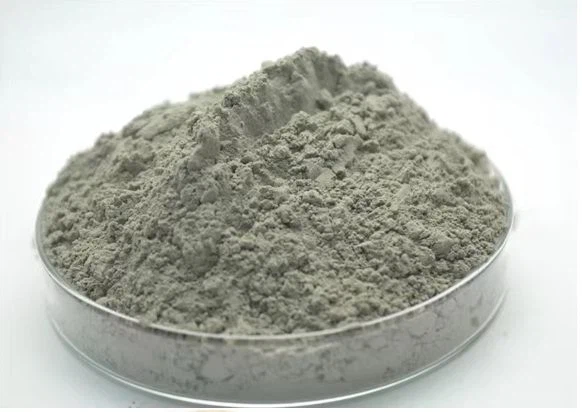
In contrast to retarding admixtures, accelerating admixtures are used to speed up the setting and hardening process of concrete made with bulk Portland cement. They are commonly used in cold weather conditions or when early strength development is required. In cold weather, the low temperature slows down the hydration process of cement, which can significantly delay the setting and hardening of the concrete. Accelerating admixtures can increase the rate of hydration, allowing the concrete to gain strength more quickly.
Calcium chloride is one of the most well - known accelerating admixtures. It works by increasing the solubility of cement compounds and promoting the formation of hydration products. Other accelerating admixtures include soluble carbonates, silicates, and aluminates.
It's worth noting that the use of calcium chloride should be carefully considered, especially in reinforced concrete. Calcium chloride can increase the risk of corrosion of steel reinforcement due to the presence of chloride ions. Therefore, non - chloride accelerating admixtures are often preferred in reinforced concrete applications.
Air - Entraining Admixtures
Air - entraining admixtures are used to introduce tiny, uniformly distributed air bubbles into the concrete made with bulk Portland cement. These air bubbles act as a cushion, relieving the internal pressure caused by the expansion of water when it freezes. As a result, air - entrained concrete is more resistant to freeze - thaw damage, which is a major concern in regions with cold climates.
Air - entraining admixtures work by reducing the surface tension of the water in the concrete mix, allowing air to be incorporated during mixing. The air bubbles typically range in size from 0.05 to 1 mm. The amount of air entrained in the concrete is usually in the range of 4% - 8% for normal weight concrete.
In addition to improving freeze - thaw resistance, air - entrained concrete also has better workability and finishing characteristics. The air bubbles act as lubricants, making the concrete easier to place, consolidate, and finish.
Waterproofing Admixtures
Waterproofing admixtures are used to reduce the permeability of concrete made with bulk Portland cement, making it more resistant to the passage of water. These admixtures are commonly used in structures such as basements, water tanks, and swimming pools, where water tightness is crucial.
There are two main types of waterproofing admixtures: integral waterproofing admixtures and surface - applied waterproofing admixtures. Integral waterproofing admixtures are added to the concrete mix during batching. They work by reacting with the cement hydration products to form a dense, impermeable structure within the concrete. Surface - applied waterproofing admixtures, on the other hand, are applied to the surface of the hardened concrete. They form a protective layer on the surface of the concrete, preventing the ingress of water.
Interface Agents
Interface agents, such as the one available at Interface Agent, are used to improve the bond between two different concrete layers or between concrete and other construction materials. When new concrete is placed on existing concrete, there may be a weak bond between the two layers, which can lead to delamination and reduced structural integrity. Interface agents can enhance the bond strength by providing a chemical or mechanical connection between the two surfaces.
These agents can be in the form of liquid adhesives, polymer - modified mortars, or bonding primers. They are applied to the surface of the existing concrete before the new concrete is placed. Interface agents can also be used to improve the bond between concrete and other materials such as bricks, blocks, and steel.
Supplementary Cementitious Materials
Although not strictly admixtures, supplementary cementitious materials are often used in combination with bulk Portland cement to improve the performance of concrete. Common supplementary cementitious materials include fly ash, slag, silica fume, and metakaolin.
Fly ash is a by - product of coal - fired power plants. It consists of fine particles of silica, alumina, and iron oxide. When fly ash is added to the concrete mix, it reacts with the calcium hydroxide produced during the hydration of cement, forming additional cementitious compounds. This can improve the workability, durability, and long - term strength of the concrete.
Slag is a by - product of the iron and steel industry. It is a hydraulic material that can react with water and calcium hydroxide to form cementitious compounds. Slag - cement concrete has good durability and resistance to sulfate attack.
Silica fume is a very fine powder produced as a by - product of the silicon and ferrosilicon industry. It is highly reactive and can significantly improve the strength and durability of concrete. Silica fume is often used in high - performance concrete applications.
Metakaolin is a calcined clay that has pozzolanic properties. It can react with calcium hydroxide to form additional cementitious compounds, improving the strength and durability of concrete.
Conclusion
As a supplier of Bulk Portland Cement, I understand the importance of using the right admixtures to meet the specific needs of different construction projects. Whether it's enhancing the workability, strength, durability, or setting time of the concrete, there is an admixture available to achieve the desired results.
If you're involved in a construction project and need high - quality bulk Portland cement or have questions about the appropriate admixtures for your project, I encourage you to reach out for a procurement discussion. We are committed to providing you with the best products and technical support to ensure the success of your construction project.
References
- Neville, A. M. (2011). Properties of Concrete. Pearson Education.
- Mehta, P. K., & Monteiro, P. J. M. (2014). Concrete: Microstructure, Properties, and Materials. McGraw - Hill Education.
- ACI Committee 212. (2010). Guide for Use of Chemical Admixtures in Concrete. American Concrete Institute.


